
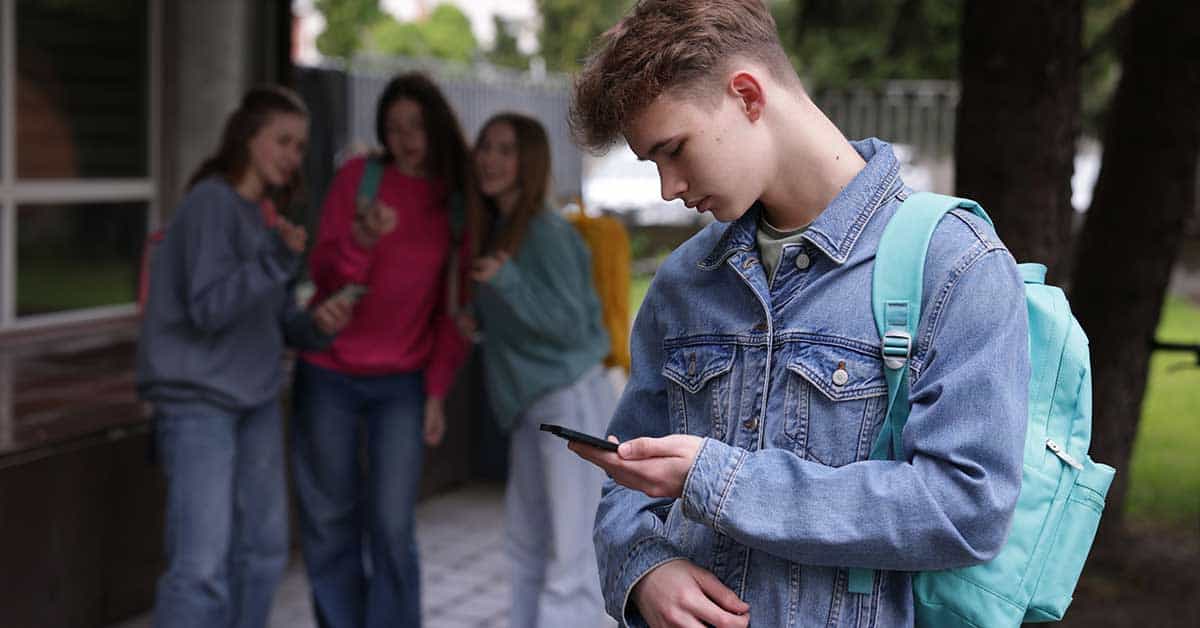
If you’re online in 2026 and still think every friendly DM is genuine, you’re not being paranoid enough. The harsh truth: in digital spaces, fake friends aren’t the exception — they’re the expectation. The algorithms reward drama, oversharing, and constant engagement, not quiet, steady loyalty, so you end up surrounded by people who treat your life like content instead of a relationship. When we talk about spotting a fake online friend, we’re really talking about self-defense.
Teens in group chats, adults in fandom servers, even parents in support groups get emotionally wrecked by people they’ve never met in person — often after ignoring the red flags because “they’re just like that online” or “it’s different on the internet.” It’s not different. It’s still your nervous system, your self-esteem, your safety. The only difference is that fake online friends can vanish, screenshot, or impersonate you in seconds.
So let’s drop the sugarcoating. If you recognize several of these ten red flags in someone you’re calling a friend, you’re not overreacting — you’re getting a warning. You can listen to it, or you can wait until it explodes in a group chat at 1 a.m.
Spot Fake Online Friends
You’ll learn how to recognize clear red flags of a fake online friend and what practical steps to take to protect your wellbeing.
- Red flags: they only contact you for favors, forget what you tell them, leave you out of plans, gossip about you, or make you feel uncomfortable.
- Behavioral signs: no effort to get to know you, not supporting or celebrating your successes, dishonesty, and putting you down.
- Quick actions: set boundaries, limit or block contact, talk to someone you trust, and consider ending the friendship if the harmful patterns continue.
10 Red Flags That Someone Is Not Your Friend
Before breaking down each sign, understand this: one of these in isolation doesn’t automatically mean the person is trash. Everyone has bad days. But when you see patterns — three, four, or ten of these showing up together — you’re not imagining it. You’re being trained to tolerate disrespect. The people who get hurt worst online usually admit afterward, “I kind of knew something was off… I just didn’t want to lose the friendship.” That sentence is the quiet soundtrack of online harm.
1. They only reach out when they need something.
If you removed every message where they’re asking for something — homework answers, help with drama, money, rides, your streaming password — would there be anything left in your chat history? If most conversations start with “Can you…?” or “Do you have…?”, you’re not their friend; you’re their resource.
The pattern is easy to spot in a server: someone who’s incredibly friendly in DMs but mysteriously disappears whenever others need help — blowing up phones when their relationship crashes or they need edits on a project, but “too busy” to send a heart when another member’s parent is in the hospital. And the moment someone sets a boundary and stops doing favors, they ghost. That isn’t friendship; it’s extraction.
Insider Tip: Skim your last 30–50 messages with someone. If you’re mostly solving problems, giving them info, or soothing them — and they barely ask a real question about you — that’s a transactional connection, not a mutual one.
Online, “needing something” doesn’t always look like favors. Sometimes it’s emotional dumping: every DM is a crisis and you’re the free therapist. Or they hype you up publicly because it makes them look supportive, while privately ignoring you for weeks. Either way, you’re a tool in their story, not a character in your own.
2. They don’t make an effort to get to know you.
A real friend is curious about you — they ask follow-up questions, remember your interests, and eventually know more than your username and profile pic. A fake friend is comfortable hovering at surface level, because depth requires effort, and effort is a kind of commitment.
It’s remarkably common to spend months in nightly voice chat with a self-described “bestie” who then blurts out “Wait, you’re not in Canada?” — never having absorbed your time zone, your background, or the city you’ve mentioned more than once. They weren’t listening. They liked having a body in the lobby, not a person in their life. If your conversations never move beyond memes, complaining, game schedules, and rants about other people, this person enjoys your presence but isn’t invested in your person. There’s a big difference between “they don’t know me yet” and “they have zero interest in knowing me.”
Insider Tip: If they had to introduce you to someone new, what could they say about you beyond your handle and one hobby? If the answer is “not much,” that’s telling.
3. They don’t remember things you’ve told them.
Everyone forgets stuff; that’s not the problem. The problem is when you share something important — your birthday, your pronouns, a test you’re stressed about, the anniversary of a loss — and it consistently falls into a black hole, while they remember exactly when they have an event and expect you to show up.
Research on online empathy gaps suggests people underestimate how much forgetting personal details damages a relationship, especially online where attention is fragmented. But you don’t need research to see the pattern. If every important detail of your life has to be re-explained like it’s the first time, that’s not forgetfulness — that’s disinterest. Telling a friend about a serious family emergency, twice, and then being asked two days later “why are you being distant, is something going on you’re not telling me?” says everything about who’s actually in the relationship.
Insider Tip: Compare how well you track their life vs. how well they track yours. If you could pass a test on their world but they’d fail a quiz on yours, the emotional labor is wildly unbalanced.
4. They don’t include you in plans.
Online, “plans” might be a group call, a game night, a collaborative project, a watch party, or a private group chat everyone else is in. If you’re always finding out retroactively — screenshots of a movie night you weren’t invited to, posts about a project you weren’t told about — something’s off.
Sometimes exclusion is subtle: they message everyone individually except you, or schedule events when they know you’re never free, then say, “Oh, we wanted you there, it just happened spontaneously.” It didn’t just happen. Digital plans leave trails — timestamps, group names, recurring patterns — so you can see exactly how often you’re left out. The most painful version: a “second” group chat with the same members and same theme, just minus you, while the original stays active to keep up appearances. That isn’t harmless. That’s engineered isolation.
5. They talk about you behind your back.
Offline, you might hear this through a friend of a friend. Online, the evidence can be painfully undeniable — forwarded screenshots, voice recordings, your own words out of context in another chat. If an online friend is comfortable mocking you, venting about you, or sharing your business in spaces you’re not in, that’s the clearest red flag of all.
This often unfolds in servers where one person becomes the unofficial punching bag — “that’s just how we talk about them, it’s a joke.” No. It’s a pattern. And if someone says, “We trash-talk everyone, it’s equal opportunity,” notice how often you are the topic. It’s rarely equal.
Insider Tip: When multiple people independently tell you the same person is two-faced, believe the pattern more than the excuses. “They’re just venting” usually means they feel entitled to disrespect you when you’re not there.
Also, a simple rule: if they constantly bring you screenshots of other people, assume they’re taking screenshots of you too. The person who happily leaks others’ private messages is rehearsing for the day they leak yours.
6. They’re not there for you when you need support.
A real friend might not always know what to say, but they show up. A fake friend vanishes the moment the conversation stops being fun or flattering. If you can’t count on them when you’re having a bad day, feeling scared, or dealing with something serious, the relationship is built on weather, not foundation.
Students being threatened in DMs have watched their “closest friend” simply stop replying because it was “too stressful.” That isn’t a friend; it’s a spectator who doesn’t like heavy episodes. Support doesn’t have to mean fixing the problem — it can be as simple as, “I’m here. That sounds awful. Want me to stay in call with you?” If this person expects you on call, literally or emotionally, whenever they melt down, but calls you “too dramatic” or “too intense” when you need them, they’re an audience that only likes one genre: their own.
7. They’re not happy for you when you succeed.
Jealousy is human. But healthy friends can hold their jealousy and still be happy for you. Fake online friends show their true colors when your life finally goes a little bit right. Notice what happens when you gain followers, join a new server or friend group, land an opportunity, or get complimented publicly. Do they congratulate you and mean it? Or do they go quiet, change the subject, make a backhanded comment, or joke about how you’ll “forget the little people”? Announce a milestone in a group you’ve helped run, and watch for the one person who disappears for three days and returns with a half-joke about how you’ll “probably be too big to answer DMs now.” The resentment is loud.
Insider Tip: Watch for micro-rejections after you share good news — delayed replies, one-word responses, immediate topic shifts. Over time, these create a climate where you’re trained not to shine.
If you feel you have to shrink your success so this person doesn’t get weird, you’re protecting their ego at the cost of your joy. That’s not friendship; that’s self-censorship in disguise.
8. They’re not honest with you.
Lying online in 2026 isn’t just “I lied about my age.” There are AI-generated photos, deepfake audio, fake screenshots, and entire invented backstories. If someone keeps getting caught in small lies — where they were, who they were with, what they supposedly said — assume the iceberg is bigger than what you see.
Recent work on deepfakes and critical thinking shows young people are increasingly vulnerable to manipulative friends who fabricate “evidence” as part of controlling dynamics — faking a screenshot to “prove” you said something you didn’t, then using it to turn others against you. It sounds extreme until it happens to you. Confronting a weird inconsistency (someone claiming to live in a city they can’t name a single basic fact about) often triggers a spiral of blame, confusion, and partial confessions — and the worst part isn’t the lie, but how comfortable they are warping reality to keep control. If your gut keeps whispering, “Something doesn’t add up,” don’t silence it. Online, identity and honesty are your only real anchors; when those go, so does your safety.
9. They put you down.
Rude jokes, teasing, and roasting are the easiest red flags to dismiss because they’re so normalized online. Here’s the line: do you feel smaller after talking to them? If yes, it doesn’t matter how many laughing emojis they add — that’s erosion, not humor. Watch what they target: your appearance in photos or on video, your interests (“you still like that?”), your intelligence (“wow, how did you not know?”), your boundaries (“you’re so sensitive, calm down”).
Being the designated punchline in a group — “we only joke with people we like” — steadily crashes self-esteem, and the tell is always the same: none of them would tolerate the identical comments turned back on them. Real friends don’t require you to bleed a little for the joke to land.
Insider Tip: Reverse the roles in your head. If you talked to them exactly the way they talk to you, would they laugh — or accuse you of being cruel? That test clears the fog fast.
10. You feel uncomfortable around them.
This is the red flag that ties everything together. You may not be able to explain it, but your body knows. You close their DMs with a knot in your stomach. You rehearse messages so you don’t set them off. You feel drained or guilty after every call.
Sometimes the discomfort is tied to obvious issues — they push sexual topics you’re not okay with, pressure you to send photos, or nudge you toward risky behavior, which is especially dangerous given the rise of online and AI-assisted sextortion. Other times it’s subtler: you just never feel safe being fully yourself. Treat that “off” feeling as a smoke alarm — not proof, but a sign something is burning somewhere. Ignoring it is how people end up emotionally manipulated, screenshotted without consent, and triangulated against others; respecting it means leaving sooner, and the person’s reaction (rage, guilt-tripping) usually proves the instinct right. You don’t need a dramatic reason to step back. “I feel tense when I talk to them” is enough.
What to Do If You Think Someone Is Not Your Friend
Recognizing red flags is only half the battle; the other half is deciding what to do. This is where most people freeze — especially teens and young adults terrified of being “mean” or “starting drama.” Here’s the unpopular opinion: protecting yourself will sometimes be labeled “drama” by the very people who benefit from your silence. You owe yourself safety more than you owe anyone an endless second chance.
Start with what you control — your boundaries, your time, your support network. If things escalate or the person becomes threatening, you may also need to involve trusted adults or report them, especially where there’s harassment, blackmail, or sextortion. That’s not overreacting. That’s survival.
Set boundaries
A boundary isn’t a lecture; it’s a line — this is what I will and won’t do. Online, that can be very practical: “I’m not comfortable talking about sexual stuff with you.” “I don’t want my messages or screenshots shared in other chats.” “If you talk about me behind my back again, I’ll leave this group.” Clear, early boundaries reveal people’s true intentions: healthy friends may be surprised, but they adjust. Fake friends mock, guilt-trip, or test the line immediately. Some boundaries get respected; some blow a friendship up within 24 hours. The explosions hurt, but they clarify — if a simple request for respect is enough to end a friendship, that friendship was resting on your silence all along.
Insider Tip: When you set a boundary, watch what they do, not what they say. Apologies are easy; behavior change is the real data.
Limit your time with them
You don’t have to go nuclear right away. Sometimes the first move is just less: fewer late-night calls, slower replies, more time invested in other people and interests. Practically: mute their notifications, stop being the first to message, and don’t rush to rescue them every time they’re in crisis. Then watch. Do you feel immediate relief? That’s information. Do they ramp up pressure, guilt, or manipulation to drag you back? That’s even more information. A common tell is sudden love-bombing — compliments and long messages the moment you pull back, after weeks of being distant or critical. They don’t miss you as a person; they miss their emotional supply, and when you don’t snap back into your old role, they go cold again.
Talk to someone else about it
Isolation is the manipulator’s favorite tool. One of the most powerful things you can do is break the silence with someone outside the drama — a trusted friend from another circle, a parent or caregiver, a school counselor or teacher, a mentor or coach. Just as you’d want a second pair of eyes on a suspicious post, you need one on an emotional situation; your brain gets foggy in the middle of it, and an outside perspective often sees patterns you’ve normalized. Show a neutral adult the DMs you’ve been defending for months and expect “messy but normal” — and hear instead, calmly, “They’re bullying you.” Sometimes just naming the behavior cracks the spell.
Insider Tip: If you’re scared to show someone your messages with this person, ask yourself why. We instinctively hide what we know others would call unhealthy.
Consider ending the friendship
There comes a point where tweaking, explaining, and hoping isn’t enough — the friendship does more harm than good, and staying is self-betrayal. Online, ending things can be both easier (block and vanish) and harder (shared servers, group chats, mutuals who take sides). Your options include a soft fade (gradually reduce contact to minimal or none), clear closure (a direct message: “This friendship doesn’t feel healthy for me anymore, so I’m stepping back”), or a hard boundary (blocking or removing them without explanation in cases of harassment, manipulation, or danger).
If they respond with rage, smear campaigns, fake screenshots, or threats, treat it as confirmation you made the right call — and consider looping in adults or even law enforcement if it crosses into harassment or blackmail. At that point you’re not just ending a friendship; you’re outmaneuvering someone who won’t respect basic boundaries. Ending a harmful online friendship can hurt for months. Within a year, people are almost always grateful: mental health improves, other friendships deepen, and — most importantly — you prove to yourself that you won’t abandon you just to keep someone else comfortable.
Final Thoughts: Trust the Red Flags, Protect Your Future
Online life blurs lines. Strangers feel intimate. Mutuals feel like real friends. Group chats feel like families — until they don’t. But the core truth stays stubbornly simple: real friendship, even online, leaves you feeling more yourself, not less.
Stop asking, “Is this bad enough to leave?” and start asking, “Is this good enough to stay?” You deserve more than people who use you for favors, gossip about you in side chats, forget your pain, and flinch at your joy. You deserve people who show up, tell you the truth, respect your boundaries, and are genuinely glad you exist.
The internet already makes it easy to be tricked — by scams, misinformation, deepfakes, curated images. Don’t let your own heart be the one place where lies get a free pass. If your body is uneasy, your messages are full of apologies, and your joy keeps shrinking to fit someone else’s comfort, the friendship isn’t fake. It’s over — you’re just the last one to admit it. Listen to the red flags. Then do the bravest, most underrated thing a person can do online: choose yourself, log off from the poison, and make room for the kind of friends who don’t need an article to prove they’re real.
Questions
Who is most likely to create a fake online friendship, and why? People seeking attention, emotional control, or financial gain often create fake online friendships to manipulate others.
What are the most common red flags that reveal fake online friends? Inconsistent stories, refusal to video chat, rapid intimacy, and requests for money.
How can I verify the identity of an online friend safely? Ask for a real-time video call, check their other social profiles, and run a reverse image search on their photos.
Isn’t it rude to confront someone I suspect is a fake online friend? No. Asking respectful, direct questions and setting boundaries is appropriate when your safety or comfort is at risk.
When should I cut ties with an online friend showing red flags? When the person repeatedly lies, pressures you, asks for money, or violates your boundaries.
Can fake online friends pose emotional or financial dangers? Yes — they can cause emotional harm, scams, identity theft, or financial loss.