Table of Contents
In a world where artificial intelligence (AI) is not just a buzzword but a living reality, preparing students for an AI-driven future is not just prudent it’s essential. The rapid evolution of AI technologies is reshaping the landscape of education and employment, creating a pressing need to equip students with the skills and strategies necessary to thrive in this new era. Its not just about adapting to change, but about harnessing the power of AI to enhance human potential. As educators, parents, and policymakers, we must pivot from traditional educational paradigms and embrace an AI-centric approach to teaching and learning.
Essential Skills for Students
Discover key skills and strategies to equip students for success in a future dominated by AI technology. – Critical Thinking: Students will learn to analyze and evaluate information effectively, a crucial skill in navigating an AI-driven landscape. – Creativity and Collaboration: Emphasis on creative problem-solving and teamwork prepares students to innovate and work seamlessly with AI technologies. – Personalized and Project-Based Learning: Implementing tailored educational approaches helps students engage deeply while developing competencies that are vital in the evolving workforce.
The AI Revolution
The AI revolution is not a distant future event; its happening now. AI technologies are permeating every industry, transforming how we work, live, and learn. From healthcare and finance to entertainment and manufacturing, AI is driving unprecedented innovation and efficiency. However, the education sector has been notoriously slow to adapt. It is imperative that we accelerate this adaptation to prepare students for a workforce that is increasingly dependent on AI capabilities.
In the past decade alone, AI has made significant strides in areas such as natural language processing, machine learning, and robotics. These advancements are not just theoretical; they have practical applications that are already being utilized in classrooms around the world. AI-powered tools are personalizing learning experiences, automating administrative tasks, and providing educators with insights into student performance like never before. According to a report by McKinsey Global Institute, automation could raise productivity growth globally by 0.8 to 1.4 percent annually. Yet, this potential can only be realized if we prepare our students to work alongside these technologies rather than be replaced by them.
Insider Tip: “Educators must focus on teaching skills that machines cannot replicate such as empathy, ethical judgment, and complex problem-solving. These human-centric skills will be in high demand as AI takes over routine tasks.” – Dr. Emily Chen, AI in Education Expert.
The Future of Work
The future of work is being reshaped by AI, and it demands a workforce that is adaptable, resilient, and continuously learning. The World Economic Forum predicts that by 2025, 85 million jobs may be displaced by a shift in the division of labor between humans and machines, while 97 million new roles may emerge that are more adapted to this new division.
In this new world, the traditional career ladder is giving way to a lattice, where lateral moves and lifelong learning are the norms. The skills that were once considered valuable are being supplanted by a demand for versatility and technological fluency. Jobs will not just require familiarity with AI tools but an ability to leverage AI to create value. This shift underscores the importance of embedding AI education within the curriculum from an early age. We need to move beyond coding and computer science to encompass a broader understanding of AI’s impact on society, ethics, and the economy.
Insider Tip: “As AI continues to evolve, jobs will require a blend of hard and soft skills. Encourage students to develop a portfolio of experiences that demonstrate their ability to adapt and innovate in various contexts.” – Sarah Martin, Career Development Specialist.
The Future of Learning
Just as AI is transforming the workplace, its also revolutionizing learning environments. However, the implementation of AI in education is not about replacing teachers with machines; it’s about augmenting the educational experience, making it more personalized and effective.
The use of AI in education enables personalized learning pathways that can cater to the unique needs and learning paces of individual students. AI can identify students strengths and weaknesses, tailor content to their level of understanding, and provide real-time feedback. The integration of AI in classrooms allows teachers to focus more on fostering critical thinking and creativity, while AI handles the administrative burden. Moreover, AI can facilitate remote learning, breaking down geographical barriers and making education accessible to all.
Insider Tip: “Leverage AI to create a learning environment that is dynamic and responsive. Use AI analytics to monitor student engagement and identify areas where students may need additional support.” – Dr. Kevin Lopez, Educational Technology Consultant.
Essential Skills for the AI Era
Critical Thinking
Critical thinking is more crucial than ever in an AI-driven world. While AI is capable of processing data and identifying patterns, it lacks the human ability to make nuanced judgments. Students must be taught to question assumptions, evaluate evidence, and draw reasoned conclusions.
Teaching critical thinking involves encouraging students to engage with complex problems and explore multiple solutions. Its about moving beyond rote learning to a more inquiry-based approach. Educators can employ strategies such as Socratic questioning and problem-based learning to cultivate these skills.
Creativity
In an AI-dominated landscape, creativity is a defining human trait that machines cannot replicate. As AI handles routine tasks, human creativity will be the key to innovation and differentiation. Encouraging students to think outside the box and explore new ideas is vital.
Creative thinking should be nurtured through art, music, and drama, but also through encouraging experimentation and risk-taking in all areas of study. By integrating creative projects and interdisciplinary approaches into the curriculum, we can inspire students to innovate and problem-solve creatively.
Communication
Effective communication is essential in a world where collaboration across cultures and disciplines is increasingly common. Despite AIs ability to process language, it cannot replicate the subtleties of human communication, such as empathy and emotional intelligence.
Students should be taught to articulate their ideas clearly, listen actively, and engage in meaningful dialogue. This can be achieved through activities that involve public speaking, group discussions, and collaborative projects. Communication skills are not just about speaking well; they also involve the ability to listen and understand diverse perspectives.
Collaboration
The ability to work effectively in teams is crucial in an AI-driven economy. AI may facilitate collaboration by breaking down geographical barriers, but the human touch is irreplaceable when it comes to building relationships and fostering trust.
Students should be encouraged to participate in group projects and collaborative learning experiences. These activities teach students how to negotiate, compromise, and leverage the strengths of team members to achieve common goals. Collaboration also involves digital literacy being able to use technology to communicate and collaborate effectively.
Character
Character education is often overlooked in discussions about AI and the future of work. However, traits such as resilience, empathy, and ethical judgment are what truly set humans apart from machines.
Educators must focus on developing students character by integrating social-emotional learning (SEL) into the curriculum. SEL programs teach students to manage emotions, set goals, show empathy for others, and make responsible decisions. These are the skills that will not only help students succeed in the workplace but also lead fulfilling lives.
Insider Tip: “While technical skills are important, character is what will truly differentiate individuals in an AI-driven world. Focus on teaching values such as integrity, perseverance, and empathy.” – Dr. Lisa Tran, Educational Psychologist.
Essential Strategies for the AI Era
Personalized Learning
Personalized learning is a strategy that leverages AI to tailor the educational experience to the needs of each student. By using AI analytics, educators can create individualized learning plans that optimize student outcomes.
For instance, AI can track a students progress and adapt the curriculum in real-time, providing extra support where needed or advancing the student to more challenging topics. Personalized learning not only enhances academic performance but also increases student engagement and motivation.
Project-Based Learning
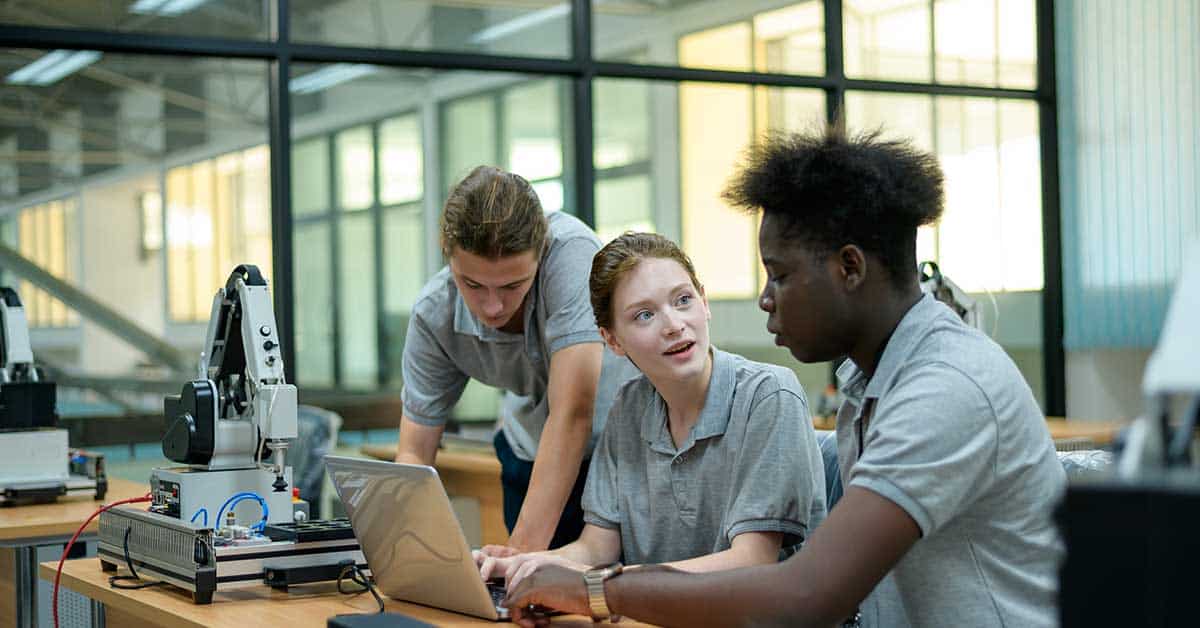
Project-based learning (PBL) is an educational approach that allows students to gain knowledge and skills by working on real-world projects. PBL fosters critical thinking, creativity, and collaboration skills that are essential in an AI-driven world.
In a PBL environment, students work on projects that require them to investigate complex questions, problems, or challenges. This hands-on approach to learning encourages students to take initiative, think critically, and apply their knowledge in practical settings. Moreover, PBL can be integrated with AI tools to enhance the learning experience and provide students with real-time feedback.
Competency-Based Progression
Competency-based progression is a strategy that allows students to advance based on their mastery of a subject rather than time spent in a classroom. This approach recognizes that students learn at different paces and provides a more personalized and flexible learning experience.
AI can support competency-based progression by providing educators with detailed insights into student performance. This data-driven approach allows for timely interventions and ensures that students are truly mastering the material before moving on. Competency-based progression not only improves academic outcomes but also prepares students for a dynamic and rapidly changing workplace.
Social-Emotional Learning
Social-emotional learning (SEL) is a critical component of preparing students for an AI-driven future. SEL programs teach students to understand and manage their emotions, set positive goals, show empathy for others, and make responsible decisions.
Incorporating SEL into the curriculum helps students develop the character traits and interpersonal skills that are essential in an AI-driven world. Moreover, SEL supports mental health and well-being, which are crucial for success in both academic and professional settings.
Insider Tip: “Integrate SEL into every aspect of the school day. Encourage reflection, mindfulness, and empathy-building activities to help students develop strong social-emotional skills.” – Dr. Amanda Lee, SEL Specialist.
The AI Era
As we stand on the brink of an AI era, the challenge is clear: we must prepare students not just to survive, but to thrive in a world where AI is omnipresent. The skills and strategies outlined in this article are not just about preparing students for the future they are about empowering them to shape it.
The AI era presents unprecedented opportunities for innovation and growth. By embracing AI in education and equipping students with the skills and strategies they need, we can ensure that the next generation is ready to take on the challenges and seize the opportunities of an AI-driven world.
Insider Tip: “Stay informed about the latest AI developments and continuously adapt your teaching methods. The AI landscape is constantly evolving, and so should our educational practices.” – Dr. John Patel, AI and Education Researcher.
In conclusion, preparing students for an AI-driven future requires a fundamental shift in how we approach education. It demands a focus on essential skills and strategies that will enable students to navigate an increasingly complex and interconnected world. By prioritizing critical thinking, creativity, communication, collaboration, and character, we can ensure that our students are not just prepared for the future they are empowered to create it.
Q & A
What essential skills should students develop for an AI-driven future?
Students should develop critical thinking, creativity, and digital literacy.
How can educators teach students about AI effectively?
Educators can incorporate hands-on projects and real-world applications.
Who should be involved in preparing students for AI advancements?
Teachers, parents, and industry professionals should collaborate together.
What strategies can schools implement for AI readiness?
Schools can offer AI courses and promote interdisciplinary learning.
How can students overcome anxiety about AI’s impact on jobs?
Students can focus on adaptability and continuous learning to thrive.
Why should parents support AI education in schools?
Parental support helps emphasize the importance of future skills needed.