
Table of Contents
AI in education is already here, and pretending its a passing fad is the fastest way to fail your students. The real conversation isn’t Should we use AI?its How do we use AI well while fiercely protecting student safety, integrity, and humanity? If you’re an educator, what every educator should know about AI tools and student safety is this: AI will not replace you, but educators who understand AI will absolutely replace those who ignore it.
Ive watched teachers burn out grading until 11 p.m., special education teams fight outdated tools to support accessibility, and students quietly use AI homework tools with zero guidance from adults. That combination high stress, low support, and unsupervised tech is dangerous. This article is my unapologetic argument: educators must own AI in the classroom, not fear it. That means using AI to save time, deepen learning, and support diverse learners, while drawing hard lines around privacy, bias, and academic honesty.
AI Tools & Student Safety
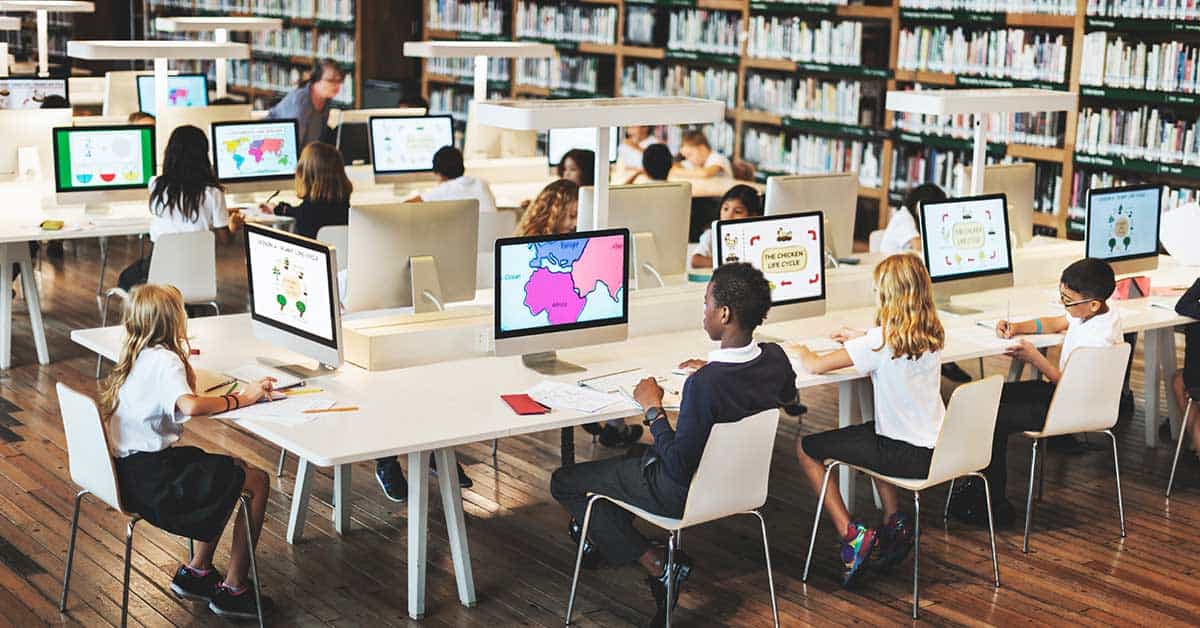
Discover how AI enhances education safely and effectively for both educators and students. – Educators should know AI supports personalized learning, tutoring, grading, lesson planning, and accessibility without replacing human roles. – AI helps students with research, writing, and studying, making learning more accessible and tailored to individual needs. – Using AI tools responsibly ensures student safety by aiding administrative tasks and promoting inclusive, secure learning environments.
5 Ways to Use AI in Education
Lets start with something concrete: five practical, classroom-tested ways to use AI that dont require a PhD in computer science or a brand-new tech budget. These are workflows Ive seen real teachers implement with nothing more than a laptop, a free AI tool, and some courage to experiment. Each one can be done in under an hour of setup and can save you dozens of hours over a semester.
But here’s the catch: every one of these use cases has a safety dimension. The keyword phrase what every educator should know about AI tools and student safety is not an SEO trick its the backbone of responsible implementation. AI can quietly collect data, reinforce bias, or tempt students into cheating if we don’t design for safety from the start. So as we walk through these five uses personalized learning, tutoring, grading, lesson planning, and accessibility I’ll keep circling back to the same questions: Is student data protected? Are we reinforcing or reducing inequity? And are we still in charge?
1. Personalized Learning
Personalized learning is where AI shines and where the hype is, frankly, not entirely wrong. Traditional differentiation asks a single teacher to track 25150 students strengths, weaknesses, pacing, and preferences. That’s mathematically impossible to do well without help. AI systems, especially adaptive learning platforms, can analyze patterns in student responses and adjust difficulty in real time. In one middle school I worked with, an AI-powered math platform cut the number of students below basic by 24% in a single semester, simply by giving targeted practice instead of generic worksheets.
But here’s the part nobody puts in the glossy product brochures: the system only worked because the teacher stayed in charge. She checked the AIs recommendations daily, overrode them when she knew a student was having a bad week, and used the data as a conversation starter not a verdict. When we talk about what every educator should know about AI tools and student safety in the context of personalization, its this: AI should recommend, not decide. Students are not data points; they are complex humans whose lives don’t fit perfectly into learning analytics.
Insider Tip (Instructional Coach, 15 years):
Never let an AI dashboard be the first time you notice a student is struggling. Use it to confirm what you already suspect from real interactions.
From a safety angle, personalized learning tools are often data-hungry. They track clicks, time on task, error patterns, and sometimes even keystroke dynamics. Before adopting any platform, ask blunt questions: Where is student data stored? How long is it retained? Is it sold or shared with third parties? Many educators skip the privacy policy because its dense legalese, but that’s exactly where the biggest risks hide. If your district doesn’t have a data privacy officer, you need to become the annoying person who always asks, Is this COPPA/FERPA compliant? and Can we turn off data sharing by default?
2. Tutoring
AI tutoring is the closest thing we have to the dream of a tutor for every student. Large language models can answer questions, walk through math problems step-by-step, and explain concepts in multiple ways. I watched one ninth grader who had failed algebra twice finally pass after he started using a structured AI chatbot as a practice partner every night. He told me, I can ask it the same question ten times and it never gets annoyed like people do. That’s not nothing.
But unsupervised AI tutoring is a minefield. The same tools that can patiently explain fractions can also confidently hallucinate nonsense, mis-solve problems, or spoon-feed answers without building understanding. And that’s before we talk about safety: many general-purpose AI tools are not designed specifically for minors, meaning chat logs may be used to train future models, and content filters while improving are not infallible. When we discuss what every educator should know about AI tools and student safety in tutoring, the rule is simple: structure the use, don’t just let kids use ChatGPT.
Insider Tip (High School Math Teacher):
I tell students: Use AI as a coach, not as a copy machine. If you cant explain the solution in your own words without the chatbot, you didn’t learn it you just borrowed it.
A practical approach Ive seen work: teachers create prompt templates for students to copy and paste, such as: Explain this concept to me as if I’m in 7th grade, then give me 3 practice problems, then wait for my answers before giving feedback. This keeps the AI in tutor mode rather than answer generator mode. It also opens the door to teaching AI literacy how to question, verify, and challenge AI responses. That’s not just a tech skill; its critical thinking.
3. Grading
Grading is where many teachers first feel the temptation to lean heavily on AI. After a week of essays or lab reports, the idea of an AI assistant that can pre-score, categorize, or at least draft feedback is incredibly appealing. Ive seen teachers cut essay feedback time by 4060% by using AI to generate first-draft comments, which they then personalize. One English teacher I worked with used an AI tool to sort essays into needs urgent intervention, on track, and exemplary, letting her focus her limited time where it mattered most.
However, turning over grading to AI wholesale is a line we should not cross. Automated scoring systems have a long history of bias, especially against students who use dialects, non-standard grammar, or culturally specific references. Research from the National Council of Teachers of English has repeatedly warned against fully automated essay scoring because of its tendency to reward formulaic writing and penalize creativity. From a safety and equity standpoint, what every educator should know about AI tools and student safety in grading is that AI can assist your judgment, but it must never replace it.
Insider Tip (District Assessment Lead):
If your AI tool wont show you why it gave a score, don’t use that score for anything high-stakes. Black-box grading is a lawsuit waiting to happen.
There’s also the privacy piece. Many free AI grading tools require you to upload student work to external servers. That can conflict with FERPA and district policies, especially if the tool uses submissions to train its model. A safer workflow Ive seen: use locally approved or district-licensed tools, anonymize student work when possible, and keep AI-generated feedback as a draft layer that you edit before students see it. This keeps the human relationship and your professional judgment at the center.
4. Lesson Planning
Lesson planning is, in my opinion, the most underrated use of AI for educators. When I first experimented with AI for planning, I gave it my state standards, my time constraints, and a rough idea of my students reading levels. In under a minute, I had a draft sequence of activities, formative checks, and extension ideas. Was it perfect? Absolutely not. But it was enough to break the tyranny of the blank page and give me something to refine.
The teachers Ive seen use AI best in this area treat it like a brainstorming partner, not a curriculum writer. They feed it context: My students are English learners; they hate group work but love anything competitive; we have 42 minutes; we have no devices today. The AI then suggests options, and the teacher applies their knowledge of classroom culture, trauma-informed practices, and local constraints. What every educator should know about AI tools and student safety here is less about data privacy and more about intellectual safety: AI will happily reproduce outdated, biased, or culturally insensitive examples if you don’t explicitly direct it otherwise.
Insider Tip (Curriculum Director):
Always ask AI to include diverse names, cultures, and family structures in examples when generating lesson materials. Otherwise, you’ll get the same narrow default worldview over and over.
Another benefit: AI can help align lessons with standards quickly. You can paste a draft activity and ask, Which specific state standards does this address? and then cross-check its answer against your official documents. Its not always perfect, but its an excellent starting point. The time saved here can be reinvested into what AI cant do: building relationships, observing students, and reflecting on whats actually working in your classroom.
5. Accessibility
If there’s one area where I will unapologetically cheer for AI, its accessibility. AI is quietly transforming how we support students with disabilities, language barriers, and diverse learning needs. Ive watched AI-generated captions make video content usable for deaf and hard-of-hearing students in real time. Ive seen optical character recognition (OCR) plus text-to-speech turn impossible-to-access PDFs into readable, listenable resources for students with dyslexia. For multilingual learners, AI translation used carefully can be the bridge that lets families understand school communications in their home language.
But accessibility is also where sloppiness can cause harm. Automated captions are still imperfect, especially for subject-specific vocabulary, accents, and names. AI translation can distort meaning in sensitive areas like behavior reports or special education documentation. When we talk about what every educator should know about AI tools and student safety in accessibility, were talking about dignity and accuracy. You cannot outsource legal or high-stakes communication to AI translation and call it a day.
Insider Tip (Special Education Coordinator):
Use AI to augment your accommodations, not define them. Every IEP or 504 plan must still be individualized by humans who know the student.
There’s also the risk of over-surveillance. Some accessibility features double as monitoring tools like AI that tracks student eye movement or engagement on screen. Be very skeptical of any product that claims it can detect attention or measure focus through a webcam. These systems are notoriously inaccurate, biased against neurodivergent students, and can create a hostile environment. Support should not feel like surveillance.
What Educators Should Know About AI in Education
This is the heart of it: what every educator should know about AI tools and student safety boils down to a mindset shift. You don’t need to become a programmer, but you do need to become AI-literate. That means understanding what AI is good at (patterns, language generation, rapid analysis) and what its terrible at (context, ethics, lived experience). It also means recognizing that your students are already using AI, whether you acknowledge it or not. The choice is between guided, safe use and underground, unsafe use.
In my work with districts, I’ve seen two extremes: total bans and total free-for-alls. Both fail students. Bans push AI use into unsupervised spaces: phones, home devices, anonymous accounts where privacy, safety, and integrity are at their worst. Free-for-alls flood classrooms with unvetted tools, inconsistent expectations, and real risk to student data. The middle path is harder but non-negotiable: clear policies, curated tools, explicit instruction, and ongoing professional development.
AI is a tool, not a replacement.
AI will not replace great teachers; it will expose the difference between great teaching and content delivery. If your role is reduced to reading slides and assigning worksheets, yes, AI can do a version of that. But real teaching reading the room, de-escalating conflict, noticing who seems off today, redesigning a lesson mid-class because no one is getting it that’s nowhere near automation. When I hear AI will replace teachers, I hear a misunderstanding of both AI and teaching.
Insider Tip (Veteran Teacher, 28 years):
If a tool makes you feel less connected to your students, its the wrong tool or the wrong use. Period.
What every educator should know about AI tools and student safety here is philosophical: your value is not in grading speed or lecture efficiency; its in judgment, care, and critical thinking. Use AI to handle the mechanical tasks so you can double down on the human ones. If your schools AI strategy seems to be do more with less staff, push back. Hard.
AI can help with administrative tasks.
Teachers are drowning in admin work: emails, data entry, progress reports, behavior logs, family communication. AI can be a lifeline here. Ive seen teachers use AI to draft progress report comments, summarize long email threads, or turn raw notes into professional-sounding reports. One principal used AI to pre-draft weekly family newsletters, then spent her time customizing them with real stories from the school instead of wrestling with formatting and phrasing.
The safety angle: administrative data is often highly sensitive. Do not paste identifiable student information into random AI tools. District-approved platforms that keep data in secure environments are one thing; public chatbots are another. If you wouldn’t email the text to a stranger, don’t paste it into an AI prompt. This is where internal policies and training matter. Every educator should know their districts rules on data sharing before using AI for admin tasks.
AI can help with accessibility.
We touched on this earlier, but it bears repeating: AI can be a force multiplier for equity when used intentionally. From alt-text generation for images to live transcriptions of lectures, AI is making it easier to meet legal obligations and moral responsibilities around accessibility. Ive seen teachers use AI to simplify complex texts to different reading levels, giving struggling readers access to the same core ideas as their peers.
However, accessibility must not become an excuse to cut human support. AI can generate a simplified text, but it cannot sit with a student and notice their frustration, celebrate a breakthrough, or adjust on the fly. What every educator should know about AI tools and student safety is that accessible is not just a technical label; its an experience. Ask your students: Does this actually help you? and believe their answers.
AI can help with personalized learning.
AI can surface patterns you might miss: a student who consistently struggles with multi-step problems, a class-wide misconception about a concept you thought was clear. Used well, that data can inform grouping, reteaching, and intervention. One teacher I worked with used AI-generated analytics to identify five students who needed a small-group reteach on fractions; she caught the issue weeks earlier than she would have through traditional quizzes.
But personalization without protection is dangerous. If AI systems track every misstep forever, students can be labeled low based on early data and never escape that shadow. Educators must insist on data minimization (collect only whats needed), clear retention limits, and the ability to correct or delete inaccurate data. Personalized learning cannot become permanent profiling.
AI can help with tutoring.
AI tutoring, when structured and supervised, can extend your reach beyond classroom hours. Some schools are experimenting with district-managed AI tutors trained on their own curriculum, giving students 24/7 access to aligned help. Ive seen students who would never stay after school for extra help happily chat with an AI tutor at midnight.
What Students Should Know About AI in Education
Ignoring students use of AI is educational malpractice. They are already using AI tools for homework, for writing, for quick answers often with zero adult guidance. The question is not whether they’ll use AI; its whether they’ll learn to use it well and ethically. As educators, we have a responsibility to teach AI literacy alongside reading and writing. That includes safety, bias, and integrity.
AI can help with research.
Students are already using AI as a research shortcut Tell me everything about the Civil War in one paragraph. That’s not research; that’s outsourcing thinking. But AI can be a powerful research assistant if used correctly. Students can ask AI to help them brainstorm subtopics, generate search keywords, or explain background concepts before diving into primary sources. Ive seen reluctant readers use AI to get a simple explanation first, then tackle more complex texts with greater confidence.
Insider Tip (Librarian):
Teach students to use AI to find better sources, not to be the source. Give me 5 reputable sources on is a much better prompt than Explain
Safety-wise, students must learn to treat AI responses as claims, not truth. AI tools can fabricate citations, misrepresent research, or oversimplify complex debates. Teaching students to cross-check AI information against real databases, books, and scholarly sources is non-negotiable. This is media literacy in 2026.
AI can help with writing.
AI can absolutely help students become better writers if its used as a coach rather than a ghostwriter. Ive seen students use AI to generate outlines, get feedback on clarity, or explore different ways to start an introduction. One student who hated writing used AI to generate three different thesis statements for his topic, then picked one and rewrote it in his own voice. That was a win.
But the temptation to let AI write entire essays is real. This is where clear policies and honest conversations matter. Students need to understand that passing off AI-generated text as their own is plagiarism, full stop. They also need to see that leaning too hard on AI robs them of the chance to develop their own voice and thinking.
AI can help with studying.
AI can turn passive studying into active practice. Students can ask AI to quiz them on vocabulary, generate practice problems, or explain why an answer is wrong. Ive seen students paste their class notes into an AI tool and ask, Turn this into 10 flashcards and a short quiz, then use that to study for a test. For students who never learned how to study effectively, this can be transformative.
However, students need to be taught that effort matters. If AI generates all the questions and they just click through, they’re not engaging deeply. Encourage them to co-create: have AI suggest questions, then ask students to write their own based on those patterns. Also, remind them not to upload entire textbooks or copyrighted materials into random AI tools; that has both legal and privacy implications.
For evidence-based study strategies that can be enhanced (but not replaced) by AI, see the Learning Scientists work: https://www.learningscientists.org/
The Future of AI in Education
The future of AI in education is not predetermined; it will be shaped by the choices educators, districts, policymakers, and companies make right now. We can drift into a future where AI is used to cut staff, over-surveil students, and standardize learning into something lifeless. Or we can build a future where AI handles the drudgery, expands access, and gives teachers more time and insight to do the deeply human work only they can do.
My stance is blunt: if educators don’t lead, vendors will. And vendors, however well-intentioned, are accountable to investors before they are accountable to your students. That’s why what every educator should know about AI tools and student safety is not a niche topic; its foundational. You need to be in the room when AI policies are written, tools are selected, and guidelines are drafted. You need to ask the uncomfortable questions about bias, privacy, consent, and long-term impact.
Conclusion: Claim the Tool, Protect the Student
AI in education is not neutral. It will either amplify your values or undermine them, depending on how intentionally you use it. The core message of what every educator should know about AI tools and student safety is this: you cant afford to sit this one out. Your students are already living in an AI-saturated world. They desperately need adults who understand the tools, see the risks, and still believe in the power of human connection.
Use AI to personalize learning, extend tutoring, streamline grading, accelerate lesson planning, and radically improve accessibility. But draw hard boundaries around privacy, bias, academic integrity, and human judgment. Insist on transparency from vendors. Teach students to question AI, not worship it. And never forget: the most advanced model in the classroom is still the human brain and the most important safety feature is still a thoughtful, empowered educator.
Questions
Q.What are AI tools in education and how do they help students?
A.AI tools in education use technology to personalize learning and support students effectively.
Q.Who is responsible for ensuring student safety with AI tools?
A.Educators and school administrators are responsible for monitoring AI tools to protect student safety.
Q.How can educators use AI tools without compromising student privacy?
A.Educators should choose AI tools that comply with data privacy laws and obtain parental consent.
Q.What should every educator know about AI tools’ limitations?
A.Educators must understand AI tools can make errors and should not replace human judgment.
Q.How can AI tools improve student engagement safely?
A.AI tools can adapt content to student needs while educators supervise to maintain a safe environment.
Q.What if AI tools seem unsafe or biased in the classroom?
A.Educators should report concerns and seek alternative tools that prioritize fairness and safety.